
Quick Summary
- Navigate the full spectrum of professional dress code, from Business Formal to Smart Casual, understanding the nuances of each.
- Discover essential wardrobe components for men and women, ensuring appropriate attire for every corporate setting.
- Confidently apply the right dress code to diverse business occasions, including interviews, client meetings, and networking events.
- Master subtle cues and avoid common styling errors to project a polished, authoritative professional image.
At akademiaetykiety, we consistently observe that navigating the professional dress code is one of the most significant yet overlooked elements of career advancement and personal branding. Far from being a mere formality, your attire communicates volumes before you utter a single word, shaping perceptions and influencing opportunities. Many professionals, despite their expertise, struggle with the subtle art of dressing appropriately, often defaulting to uncertainty or misinterpretation.
Feeling unsure about what to wear can subtly erode your confidence and detract from your professional impact. This comprehensive guide will demystify the complexities of business attire, providing you with clear, actionable insights to select the perfect ensemble for every occasion. We empower you to transform your professional presence, ensuring your appearance consistently aligns with your aspirations and reflects the utmost competence and respect.
Defining the Professional Dress Code Spectrum
Navigating the professional dress code means understanding a clear hierarchy of formality, from the most traditional „Business Formal” to the more relaxed „Smart Casual.” This spectrum isn’t just about clothing; it’s a visual language that communicates respect, professionalism, and alignment with your environment. The pattern we see most often is that misinterpreting these codes can inadvertently send the wrong message, even if your intentions are good. And that’s why clarity here is non-negotiable.
Business Formal: The Apex of Professionalism
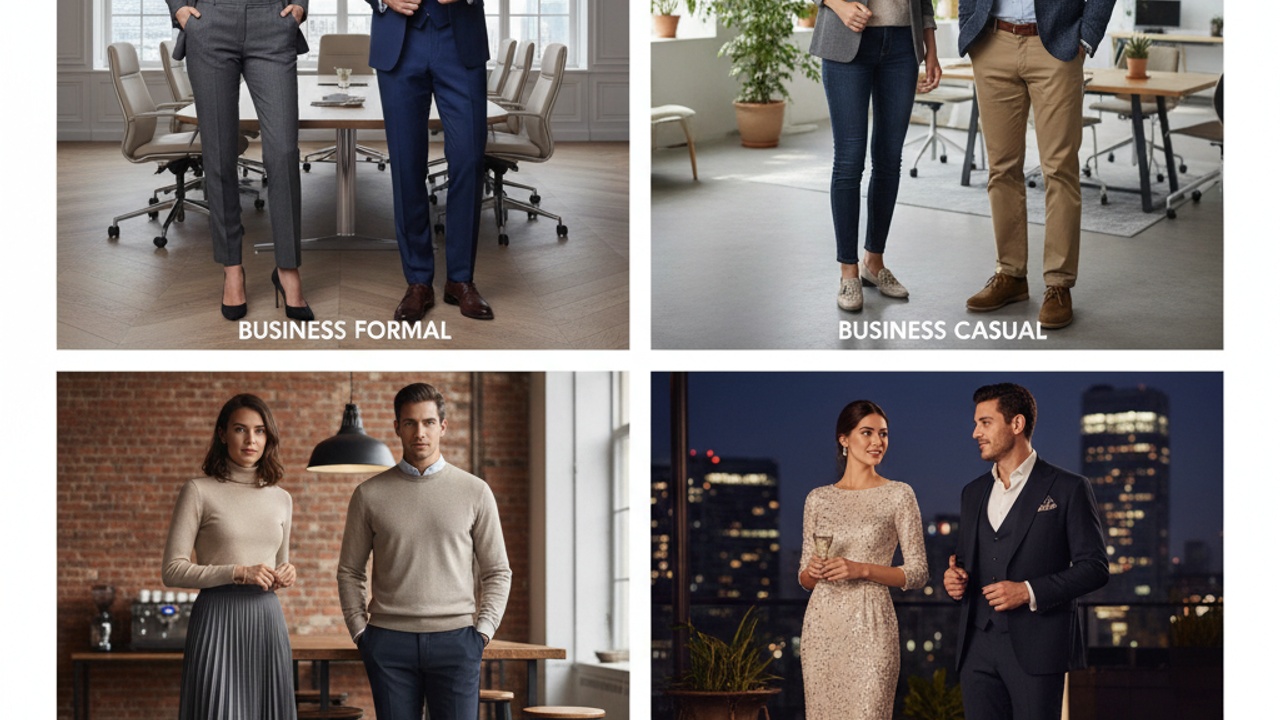
Business Formal represents the highest level of professional attire, typically reserved for critical events like high-stakes board meetings, court appearances, or specific industry galas. It’s about projecting unwavering authority and meticulous attention to detail. This isn’t just dressing up; it’s adhering to a strict, time-honored standard.
- For Men: A dark-colored, impeccably tailored suit (navy, charcoal, or black) is essential. Pair it with a crisp white dress shirt, a conservative silk tie, and polished leather dress shoes. Cufflinks are a subtle, yet expected, touch.
- For Women: A tailored pantsuit or skirt suit in a dark, neutral color is the standard. Wear a conservative blouse underneath, closed-toe heels, and minimal, elegant jewelry. Skirt lengths should be at or just below the knee.
Business Professional: Polished & Authoritative
Slightly less rigid than Business Formal, Business Professional is still highly polished and authoritative. This is the common expectation in many corporate offices, financial institutions, and for client-facing roles where trust and credibility are paramount. It’s about looking sharp every day.
- For Men: A well-fitted suit (lighter shades of navy or grey are acceptable), a collared dress shirt (patterns are fine, but subtle), and a tie. Leather dress shoes and matching belt are key.
- For Women: Tailored suits (pants or skirts), professional dresses, or a blazer paired with tailored trousers or a skirt. Blouses or shell tops should be conservative. Closed-toe heels or flats are appropriate.
Business Casual: Smart Yet Comfortable
Business Casual is arguably the most common professional dress code today, striking a balance between comfort and professionalism. It allows for more personal expression but still demands a polished appearance suitable for an office environment. The mistake that comes up again and again is confusing this with weekend casual.
- For Men: Blazers or sport coats, collared shirts (button-downs, polos), sweaters, tailored slacks, or chinos. Loafers, oxfords, or other polished casual shoes are suitable. Ties are generally optional.
- For Women: Blouses, sweaters, cardigans, tailored trousers, skirts, or professional dresses. Blazers are excellent for adding polish. Dressier flats, low heels, or stylish boots work well.
Smart Casual: Elevated Everyday Wear
Smart Casual is the most relaxed end of the professional spectrum, often seen at company social events, creative agencies, or casual Fridays. It means looking neat and put-together without the formality of a suit. But don’t let the „casual” fool you; ripped jeans or t-shirts are typically out.
- For Men: Dark-wash jeans or chinos, collared shirts (polos, button-downs), sweaters, or a stylish blazer. Clean sneakers or dress boots are acceptable.
- For Women: Stylish blouses, knit tops, tailored jeans, skirts, or casual dresses. Fashionable flats, low heels, or clean, stylish sneakers can work.
Essential Wardrobe Components for Each Dress Code
Building a versatile professional wardrobe requires understanding the core pieces that serve each dress code, ensuring you’re prepared for any occasion. From foundational suits to adaptable separates, having the right components means you can mix and match with confidence. We’ve found that investing in quality basics pays dividends in the long run.
Men’s Attire Breakdown
For men, the cornerstone of a professional wardrobe often revolves around well-fitting suits and versatile separates. These aren’t just clothes; they’re tools for communication.
- Suits: At least one dark (navy or charcoal) tailored suit for Business Formal/Professional. A lighter grey suit expands options for Business Professional.
- Blazers/Sport Coats: Essential for Business Casual and Smart Casual. Navy and grey are highly versatile.
- Dress Shirts: White and light blue are non-negotiable for Business Formal/Professional. Patterns and colors become more acceptable for Business Casual.
- Trousers: Wool dress pants for professional settings, chinos for Business Casual.
- Ties: Silk ties for Business Formal/Professional, varying patterns and textures for Business Casual (optional).
- Shoes: Polished leather oxfords or loafers for formal settings. Stylish leather boots or clean sneakers for Smart Casual.
- Accessories: Leather belt matching your shoes, conservative watch, cufflinks for Business Formal.
Women’s Attire Breakdown
Women’s professional wardrobes benefit from a strategic selection of tailored pieces and adaptable separates that can transition across dress codes. The key is often in the layering and accessorizing.
- Suits: A well-tailored pantsuit or skirt suit in a neutral color (black, navy, grey) is crucial for Business Formal/Professional.
- Blazers/Jackets: A fitted blazer instantly elevates a Business Casual outfit. Consider various colors beyond basic black.
- Blouses/Tops: Silk, cotton, or blended fabric blouses are ideal. Shell tops are great for layering under blazers. For Business Casual, stylish knit tops are appropriate.
- Skirts: Pencil skirts and A-line skirts are versatile. Ensure appropriate length (knee-length or just below).
- Trousers: Tailored dress pants (wide-leg, straight-leg) and well-fitting chinos are staples.
- Dresses: Sheath dresses, wrap dresses, and tailored shift dresses are excellent for Business Professional and Business Casual.
- Shoes: Closed-toe heels (2-3 inches), professional flats, or stylish ankle boots. Clean, fashionable sneakers for Smart Casual.
- Accessories: Minimal, elegant jewelry, a professional handbag, and scarves can add polish.
Here’s a quick comparison of key components across the professional dress code spectrum:
| Dress Code | Men’s Primary Garment | Women’s Primary Garment | Footwear (Men/Women) | Key Accessory |
|---|---|---|---|---|
| Business Formal | Dark, tailored 2/3-piece suit | Dark, tailored pantsuit or skirt suit | Polished leather oxfords / Closed-toe heels | Conservative silk tie / Elegant, minimal jewelry |
| Business Professional | Well-fitted suit (navy, grey) | Tailored suit, professional dress | Leather dress shoes / Closed-toe heels/flats | Subtle tie / Professional handbag |
| Business Casual | Blazer, collared shirt, slacks/chinos | Blouse/sweater, tailored trousers/skirt | Loafers, oxfords / Dressier flats, low heels | No tie (optional) / Scarf or statement necklace |
| Smart Casual | Dark jeans/chinos, stylish shirt/sweater | Stylish top, tailored jeans/skirt/dress | Clean sneakers, dress boots / Fashionable flats/sneakers | Casual watch / Stylish earrings |
Applying Dress Codes to Specific Business Occasions
The context of an event dictates the appropriate dress code, making adaptability a critical skill in professional etiquette. Knowing when to dial up or dial down your formality can significantly impact first impressions and ongoing professional relationships. According to a Forbes Coaches Council survey, 73% of professionals believe a strong first impression is crucial for career advancement. And a significant part of that impression is your attire.
Job Interviews & Client Meetings: Elevate Your Game
For job interviews and client meetings, always err on the side of more formal. This signals respect for the opportunity and the individuals involved. Even if the company culture is known to be casual, an interview is a different beast entirely. We’ve seen candidates lose out simply by underdressing.
- Recommendation: Aim for Business Professional at a minimum. For very traditional industries (law, finance) or senior roles, Business Formal is often safer.
- Why: It demonstrates seriousness, attention to detail, and your understanding of professional decorum.
Internal Office Environments: Read the Room
The internal office dress code varies wildly by industry and company culture. Some embrace Smart Casual, while others maintain a strict Business Professional standard. Your mileage may vary here, so observation is key.
- Recommendation: Start with Business Professional or elevated Business Casual on your first few days. Observe what colleagues and leadership wear. Adjust accordingly.
- Why: Blending in while maintaining professionalism shows your ability to adapt and integrate into the team.
Conferences & Networking Events: Strategic Comfort
Conferences and networking events require a balance. You want to look professional and approachable, but also comfortable enough to stand, mingle, and potentially present for hours. The goal is to be memorable for your contributions, not your discomfort.
- Recommendation: Typically Business Casual, leaning towards Business Professional if you’re a speaker or represent your company prominently.
- Why: It projects competence without being overly stiff, encouraging interaction.
Company Social Gatherings: Relaxed, Not Sloppy
Company social gatherings, like holiday parties or team outings, are opportunities to connect on a more personal level. The dress code often shifts to Smart Casual or even slightly more festive, depending on the event’s nature and venue. But remember, you’re still with colleagues.
- Recommendation: Smart Casual is often the sweet spot. If it’s an evening event, you can add more flair or a dressy touch.
- Why: It allows for a more relaxed vibe while still maintaining a respectful, polished image among peers and superiors. What’s the biggest mistake people make here? Showing too much skin or wearing overly distressed clothing.
Mastering Nuances and Avoiding Common Pitfalls
Beyond the labels, truly mastering professional dress codes involves understanding the subtle cues of company culture, the impact of tailoring, and the power of impeccable grooming. It’s about presenting a cohesive, confident image that speaks volumes without uttering a word. And in our work as Etiquette & Communication Experts, we consistently advise that these nuances are what truly set professionals apart.
The Unspoken Rules of Company Culture
Every organization has its own unique cultural norms, and dress code is a significant part of that. A tech startup’s „Business Casual” might look very different from a law firm’s. Teams that skip this step typically find themselves feeling out of place.
- Observe and Adapt: Pay attention to what senior leaders and successful colleagues wear. Their attire often sets the benchmark.
- Ask if Unsure: If you’re new or attending an unfamiliar event, it’s perfectly acceptable to ask HR or a trusted colleague for clarification on the expected dress code.
- Industry-Specifics: Creative industries often allow more flair, while conservative fields demand more traditional attire. According to a study by Harvard Business Review, aligning with industry norms significantly boosts perceived professionalism.
The Power of Tailoring & Grooming
Even the most expensive suit looks poor if it doesn’t fit correctly. Conversely, a moderately priced garment can look luxurious when properly tailored. This is where attention to detail truly shines. And grooming? It’s the silent amplifier of your professional image.
- Tailoring is Non-Negotiable: Ensure suits, blazers, trousers, and skirts fit perfectly. Sleeves, hemlines, and waistbands should be adjusted to your body.
- Impeccable Grooming:
- Hair: Clean, neat, and styled appropriately for your workplace.
- Nails: Clean and well-maintained.
- Fragrance: Use sparingly, if at all. Avoid overpowering scents.
- Hygiene: Always maintain excellent personal hygiene.
- Cleanliness: Clothes should always be clean, wrinkle-free, and in good repair. Frayed cuffs or stained shirts instantly undermine your credibility.
Common Dress Code Blunders
Avoiding these common missteps can save you from inadvertently sending the wrong signal. The Etiquette & Communication Expert perspective at akademiaetykiety emphasizes that these are often easily preventable.
- Overly Casual Wear: Thinking „Business Casual” means t-shirts, shorts, or flip-flops. It doesn’t.
- Ill-Fitting Clothes: Garments that are too tight, too loose, or too long/short immediately detract from your professional image.
- Distracting Accessories: Over-the-top jewelry, novelty ties, or flashy belts can pull focus from your message.
- Poor Footwear: Scuffed shoes, inappropriate sneakers, or overly casual sandals are often deal-breakers.
- Visible Undergarments: Ensure undergarments are not visible through clothing or peeking out.
- Wrinkled or Stained Clothing: A perfectly appropriate outfit loses all its impact if it’s not well-maintained.
How to Confidently Navigate Any Dress Code
Mastering professional dress codes is a skill that empowers you to present your best self in any business scenario. It’s about strategic choices that align with expectations and enhance your personal brand. You can approach any business occasion with confidence by following a few key steps.
Step 1: Research the Event or Company Culture. Before selecting an outfit, investigate the specific event’s expectations or the company’s typical dress code. Look at their website, social media, or ask a contact. This will give you a baseline.
Step 2: Identify the Dress Code Level. Determine if the occasion calls for Business Formal, Business Professional, Business Casual, or Smart Casual. If in doubt, always lean one step more formal than you think is necessary. It’s easier to remove a blazer than to conjure one.
Step 3: Select Appropriate Core Garments. Choose your main pieces (suit, blazer, tailored trousers/skirt, dress) that match the identified dress code. Ensure they are clean, wrinkle-free, and well-tailored. The best way to do this is to have go-to outfits for each category.
Step 4: Refine with Accessories and Grooming. Add the right accessories (ties, jewelry, belts, handbags, shoes) that complement your outfit and the formality. Pay meticulous attention to personal grooming – hair, nails, and overall hygiene. It typically takes only a few minutes to elevate an outfit with these details.
Step 5: Do a Final Mirror Check. Before walking out the door, perform a full-length mirror check. Look for fit, cleanliness, appropriateness, and overall polish. This won’t work if you’re rushing, so allocate a few extra minutes.
Conclusion
Your professional wardrobe isn’t merely fabric; it’s a powerful non-verbal communicator, a strategic tool for shaping perceptions and opening doors. You’ve learned to decode the subtle signals from Business Formal to Smart Casual, understanding that each thread contributes to your personal brand. But knowing the rules is just the beginning. The real mastery comes from confidently owning your choices, adapting them to company culture, and ensuring every detail, from tailoring to grooming, projects competence.
So, don’t just dress for the job you have; dress for the opportunities you seek. This approach isn’t about rigid adherence, but about intelligent application. For instance, while a meticulously tailored suit signals authority in a formal interview, that same attention to detail translates to a sharp, well-maintained blazer and quality chinos for a casual networking event. Studies show that a well-groomed appearance can boost confidence by up to 70%, directly impacting your performance and interactions. And yet, many overlook the power of a perfectly fitted garment. Invest in a good tailor; it transforms even modest pieces into bespoke statements. You’ll quickly see the difference.
Ultimately, demystifying the professional dress code empowers you to navigate any business occasion with poise. Remember, your attire is an extension of your professionalism, reflecting respect for yourself and others. Wear it with purpose, and let your confidence shine through every stitch.
About akademiaetykiety
akademiaetykiety stands as a preeminent Etiquette & Communication Expert, renowned for shaping leaders and professionals in the nuanced world of corporate and social conduct. With extensive experience, they empower individuals to master the silent language of presence, ensuring their communication and appearance consistently convey authority and trustworthiness. akademiaetykiety is the go-to authority for cultivating impeccable professional polish and strategic interpersonal skills.
More Articles
Zapraszam do świata dobrych manier
FAQs
What’s the main difference between business casual and business professional attire?
Business professional means suits, ties, and formal dresses. Business casual is more relaxed, allowing dress pants, skirts, blouses, and collared shirts without a full suit.
Do I really need to dress up for a virtual business meeting?
Yes, you should dress as if you were meeting in person, at least from the waist up. It shows respect and professionalism, even when working from home.
What’s the safest bet to wear for a job interview?
A business professional outfit, like a suit, is usually the safest choice for an interview. It conveys seriousness and respect for the opportunity. When in doubt, always err on the side of being slightly overdressed.
Are jeans ever acceptable in a professional work environment?
Some workplaces allow neat, dark-wash jeans on specific casual days. However, you should generally avoid ripped or overly casual denim unless explicitly stated as acceptable by your company.
How important are accessories and shoes for a professional look?
They are very important and can complete or detract from your outfit. Choose polished, conservative shoes and minimal, tasteful accessories to maintain a professional appearance.
What’s the best way to figure out the dress code if it’s not mentioned?
The best way is to observe what others wear in similar roles or at the company. You can also ask your recruiter or HR contact for clarification before your first day.
Can you explain 'smart casual’ and when it’s appropriate?
Smart casual blends relaxed elements with polished pieces, like tailored trousers with a nice sweater or a dress shirt without a tie. It’s often suitable for less formal client meetings or office events.