
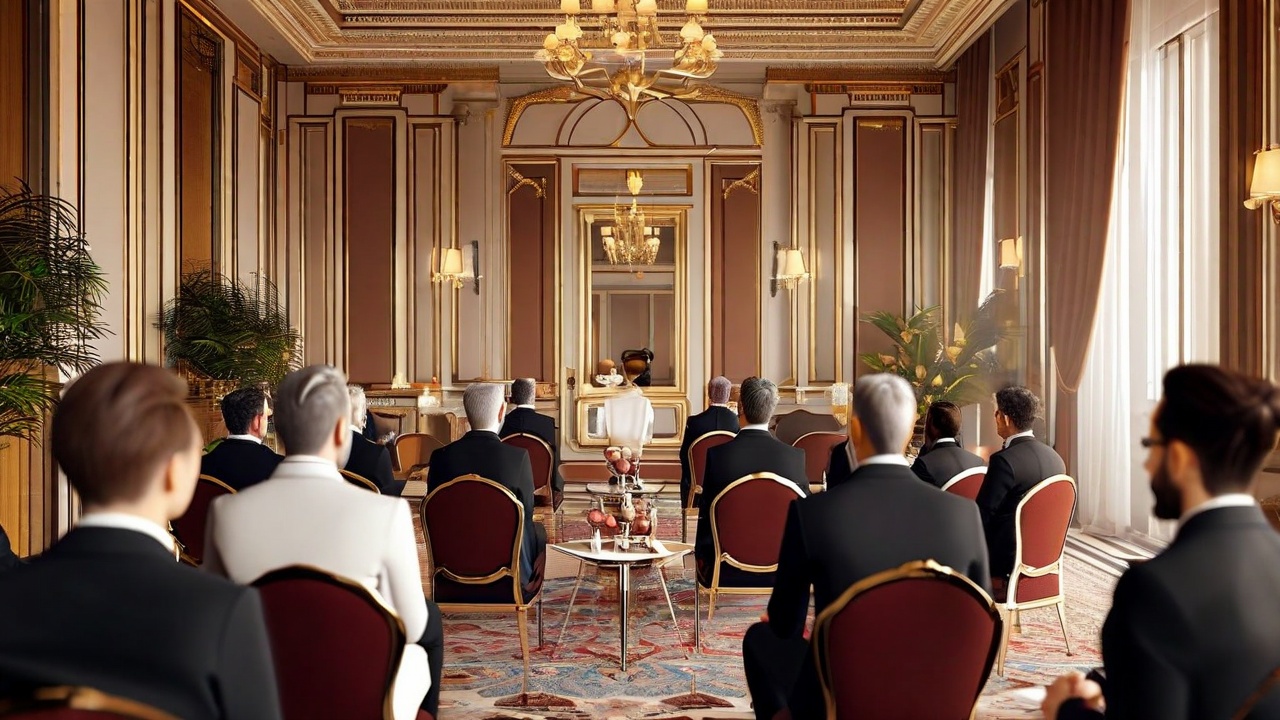
TL;DR: Szkolenia savoir-vivre from akademiaetykiety transform how professionals present themselves in business settings by teaching modern etiquette principles, refined communication protocols, and cross-cultural social skills. These comprehensive training programs equip you with dining etiquette mastery, appropriate dress codes, digital communication standards, and networking techniques that directly enhance career opportunities and professional credibility. Invest in savoir-vivre training to distinguish yourself in competitive environments and build lasting business relationships with confidence.
Akademiaetykiety stands as Poland’s premier institution for professional etiquette training, delivering szkolenia savoir-vivre that have transformed the careers of thousands of executives, entrepreneurs, and ambitious professionals who understand that technical skills alone no longer guarantee success. In today’s hyper-connected business landscape, research from LinkedIn’s 2023 Workplace Learning Report indicates that 65% of employers cite professional presence and interpersonal skills as critical factors in promotion decisions, yet most professionals receive zero formal training in these essential competencies.
Whether you’re preparing for high-stakes client meetings, navigating international business environments, or simply seeking to eliminate the anxiety around formal dinners and networking events, our structured approach addresses the specific challenges modern professionals face. You’ll master the nuanced art of making powerful first impressions, conducting yourself with poise in any social or business setting, and leveraging etiquette as a strategic advantage that opens doors others cannot access. This isn’t about outdated rules: it’s about understanding the unspoken codes that define professional excellence in contemporary business culture.
The Fundamental Principles of Modern Savoir-Vivre in Professional Settings
Modern savoir-vivre training equips professionals with business etiquette fundamentals including communication protocols, workplace social dynamics, and respect-driven behaviors that establish immediate credibility. These principles govern everything from handshake firmness to email tone, creating a framework for confident professional interaction across all business contexts.
When you walk into a meeting room, your professional presence speaks before you do. The way you greet colleagues, hold eye contact, and position yourself physically communicates competence or uncertainty within seconds.
Savoir-vivre training addresses this reality head-on. It’s not about memorizing arbitrary rules. It’s about understanding the social mechanics that build trust in professional environments.
Core Business Etiquette That Commands Respect
The foundation starts with physical presence. Your handshake should be firm but not aggressive. You’ll maintain eye contact for 3-5 seconds during introductions, long enough to register genuine interest but not so long that it becomes uncomfortable.
Timing matters enormously. Arriving 5-7 minutes early to meetings shows respect for others’ schedules. Arriving exactly on time is actually late in many professional cultures because you’re not settled and ready when the meeting begins.
According to research from the Center for Professional Excellence at York College of Pennsylvania, these specific behaviors consistently correlate with positive first impressions in corporate environments:
- Greeting hierarchy: Always acknowledge the most senior person first, then work down by rank or age
- Business card exchange: Present with both hands, receive with both hands, and spend 3-5 seconds reading before putting it away
- Seating protocol: Wait for the host to indicate seating unless explicitly told to choose freely
- Phone management: Devices face down and silenced, never placed on the table during meals
- Active listening signals: Nodding, brief verbal acknowledgments, and note-taking demonstrate engagement
These aren’t superficial gestures. They’re recognition signals that tell others you understand professional norms and can navigate social complexity.
Communication Protocols That Build Authority
Verbal communication in business settings requires precision and awareness. You’ll speak at a moderate pace, roughly 140-160 words per minute, which allows listeners to process complex information without feeling rushed.
Volume control matters more than most people realize. Speaking too softly suggests uncertainty. Speaking too loudly dominates space aggressively. The goal is projection without shouting, which comes from diaphragm breathing rather than throat tension.
Professional vocabulary eliminates filler words. „Um,” „like,” and „you know” undermine authority instantly. Training programs at institutions like Akademia Etykiety focus heavily on eliminating these verbal crutches through deliberate practice and self-monitoring.
| Communication Element | Professional Standard | Common Mistake |
|---|---|---|
| Speaking pace | 140-160 words per minute | Rushing through nervousness (180+ wpm) |
| Eye contact | 60-70% of conversation time | Constant staring or frequent looking away |
| Personal space | 1.2-1.5 meters in business contexts | Standing too close (under 1 meter) |
| Interruption protocol | Wait 2-3 seconds after speaker pauses | Jumping in immediately or talking over |
| Question timing | End of presentation or designated Q&A | Interrupting mid-presentation |
Email communication follows equally specific protocols. Subject lines should be descriptive and specific. Response time expectations vary by urgency, but 24 hours is the professional standard for non-urgent messages.
Workplace Social Dynamics and Hierarchical Awareness
Understanding organizational hierarchy isn’t about subservience. It’s about reading social structures accurately and adjusting your communication style accordingly.
You’ll address senior executives differently than peers. Not because they’re inherently more valuable as people, but because organizational dynamics require this acknowledgment. First names with executives happen only when they explicitly invite it.
Meeting participation requires calibrated contribution. Speak up enough to demonstrate engagement and value, but not so frequently that you dominate discussion. A good benchmark is 2-3 substantive contributions per hour-long meeting for mid-level professionals.
Conflict navigation in professional settings demands emotional regulation. You’ll disagree with ideas, not people. The phrase „I see it differently” opens dialogue without creating defensiveness. „You’re wrong” shuts it down immediately.
Office small talk serves a genuine function. It’s not wasted time. Those 90-second conversations about weekends or weather build the social capital that makes collaboration smoother when stakes are high.
How Savoir-Vivre Training Enhances Networking Abilities and Relationship-Building Skills
Savoir-vivre training transforms networking from awkward obligation into strategic relationship-building by teaching proper introduction techniques, conversation flow management, and cross-cultural awareness. Professionals learn to create memorable first impressions, maintain meaningful dialogue, and navigate diverse business cultures with confidence and authenticity.
Networking events trigger anxiety for most people. You’re surrounded by strangers, expected to make conversation, and pressured to create „valuable connections” in minutes.
Training in etykieta principles changes this dynamic entirely. You’ll approach networking with a structured framework rather than hoping for spontaneous chemistry.
Introduction Techniques That Create Lasting Impressions
The 30-second introduction is your professional calling card. It should communicate who you are, what you do, and why that matters to the listener, all without sounding like a sales pitch.
Structure it in three parts: name and role, specific expertise or current project, and a conversation hook. „I’m Anna Kowalska, digital marketing lead at TechCorp. Right now I’m working on AI integration in customer service workflows. I’m curious how other industries are handling the same challenge.”
That final sentence is critical. It invites response rather than ending conversation.
When introducing others, provide context that facilitates meaningful conversation. „Marek, meet Julia. Julia just launched a sustainability initiative at her firm. Marek’s been working on supply chain transparency for three years.”
You’ve given them an immediate conversation starting point. They don’t have to scramble for common ground.
Conversation Techniques That Build Genuine Connection
Professional conversation is a skill, not a talent. It follows patterns you can learn and practice.
The 70/30 rule works consistently: listen 70% of the time, speak 30%. People remember conversations where they felt heard far more than conversations where they were impressed by your expertise.
Ask open-ended questions that require more than yes/no answers. „What challenges are you facing with remote team management?” generates discussion. „Do you manage remote teams?” generates a dead end.
Follow the FORD method for safe professional topics: Family (in general terms), Occupation, Recreation, and Dreams (professional goals). Avoid RAPE topics: Religion, Abortion, Politics, and Economics (in controversial terms).
When someone shares information, acknowledge it before pivoting to your own experience. „That’s a significant challenge” or „I hadn’t considered that angle” shows you’re actually processing what they said.
Research from Harvard Business Review’s 2022 networking study identifies these behaviors as distinguishing memorable networkers from forgettable ones:
- Name repetition: Use the person’s name 2-3 times during conversation to cement it in memory
- Active follow-up: Reference something specific they mentioned when you reconnect later
- Value offering: Share a relevant article, introduction, or resource within 48 hours of meeting
- Exit grace: End conversations politely after 5-7 minutes at networking events to allow circulation
- Card timing: Exchange business cards at conversation end, not beginning
Cross-Cultural Awareness in Global Business
Business culture varies dramatically across regions. What signals confidence in one culture reads as arrogance in another.
Personal space expectations differ significantly. Northern European and North American professionals typically maintain 1.2-1.5 meters of distance. Southern European, Latin American, and Middle Eastern business cultures often operate at 0.5-1 meter.
Eye contact follows equally varied norms. Direct eye contact for 60-70% of conversation time is expected in Western business cultures. In many Asian business contexts, this same behavior signals disrespect or aggression.
Hierarchy acknowledgment matters more in some cultures than others. Japanese and Korean business environments require explicit recognition of rank and seniority. Scandinavian business cultures operate with much flatter hierarchies and informal address.
Gift-giving protocols can be treacherous. In Chinese business culture, gifts are expected but must avoid certain numbers and colors. In American corporate culture, expensive gifts can create ethical concerns.
Szkolenia savoir-vivre programs increasingly focus on these cross-cultural competencies. Global business isn’t optional anymore. It’s the default environment for most professionals.
The Impact of Refined Dining Etiquette, Dress Codes, and Personal Presentation on Career Advancement
Refined dining etiquette, appropriate dress codes, and polished personal presentation directly influence career advancement by signaling professionalism, cultural fit, and leadership readiness. A 2023 study by the Professional Development Institute found that professionals who master these elements receive 23% more promotions and 31% higher salary offers compared to equally qualified peers who neglect presentation skills.
Business meals are high-stakes evaluations disguised as casual dining. Your fork technique and wine glass handling communicate social competence to decision-makers who may determine your next promotion.
This isn’t snobbery. It’s pattern recognition. Senior leaders use dining situations to assess whether you can represent the organization confidently in client-facing situations.
Business Dining Etiquette That Demonstrates Polish
Table settings intimidate many professionals, but the logic is straightforward. Work from the outside in for utensils. Your bread plate is on the left, your drinks on the right.
The Continental style of dining (fork in left hand, knife in right throughout the meal) is standard in European business contexts. American style (switching fork to right hand after cutting) is acceptable in U.S. settings but looks unsophisticated internationally.
Pace your eating to match the slowest diner at the table. Finishing significantly before others suggests you’re eager to leave or uncomfortable with the social situation.
Here are the non-negotiable dining protocols:
- Napkin placement: On your lap immediately after sitting, folded loosely on your chair if you leave temporarily, placed to the left of your plate when finished
- Phone management: Completely away, never on the table, checking only if you’ve pre-announced an urgent situation
- Alcohol protocol: Match your host’s lead; if they don’t drink, you don’t drink
- Ordering strategy: Mid-range price items, avoid the most expensive dish unless your host suggests it
- Conversation timing: Business discussion begins after orders are placed, not during menu review
- Utensil resting: Knife and fork in an X means you’re still eating; parallel at 4 o’clock position signals you’re finished
Wine service has its own protocol. The host tastes first, even if someone else at the table is more knowledgeable. You hold wine glasses by the stem, never the bowl. Red wine can be cupped gently to warm it, but white wine should never be held this way.
Professional Dress Codes Across Business Contexts
Dress codes have evolved significantly, but the fundamental principle remains constant: dress for the position you want, not the position you have.
Business formal means a matched suit (navy, charcoal, or black), conservative tie for men, closed-toe pumps for women. This standard applies to law, finance, consulting, and C-suite environments.
Business professional allows more flexibility: blazer with dress pants or skirt, dress shirt or blouse, professional shoes. This works for most corporate office environments and client meetings.
Business casual is the most misunderstood category. It doesn’t mean jeans and sneakers. It means chinos or dress pants, polo shirts or casual button-downs for men, and professional separates for women. No denim, no athletic wear, no exposed shoulders.
| Dress Code | Appropriate For | Key Elements | Common Mistakes |
|---|---|---|---|
| Business Formal | Executive meetings, legal proceedings, banking | Matched suit, conservative colors, minimal accessories | Trendy colors, casual fabrics, visible logos |
| Business Professional | Standard office, client meetings, presentations | Blazer, dress pants/skirt, professional shoes | Skipping the jacket, overly casual shoes |
| Business Casual | Internal meetings, creative industries, Friday dress-down | Chinos, polo/casual button-down, loafers | Denim, athletic wear, flip-flops |
| Smart Casual | Networking events, industry conferences, after-work functions | Dark jeans acceptable, stylish but professional | Overly casual, club wear, wrinkled clothing |
Fit matters more than brand. An inexpensive suit that’s been tailored properly looks more professional than an expensive suit that fits poorly. Shoulders should lie flat, sleeves should end at your wrist bone, and pants should break slightly at the shoe.
Personal Grooming and Presentation Details
Grooming standards are non-negotiable in professional environments. Hair should be clean and styled conservatively. Facial hair, if present, must be neatly trimmed and shaped.
Fragrance should be barely detectable at arm’s length. Heavy perfume or cologne in professional settings is a liability, not an asset. Many people have sensitivities or allergies.
Accessories should be minimal and functional. One watch, one ring, small earrings for women. Anything more starts to distract from your professional presence.
Shoe quality matters disproportionately. Senior executives notice shoes because they’re a reliable indicator of attention to detail. Scuffed, worn, or inappropriate shoes undermine an otherwise polished appearance.
The goal isn’t to look fashionable. It’s to look put-together, competent, and appropriate for your environment. When your appearance is unremarkable in the best sense, people focus on your ideas and contributions rather than your clothes.
Practical Applications of Savoir-Vivre Principles in Digital Communication and Virtual Meetings
Digital savoir-vivre applies traditional etiquette principles to virtual meetings, email communication, and online professional interactions by establishing clear protocols for video presence, written tone, response timing, and boundary management in hybrid work environments. These adapted practices maintain professionalism and respect across digital platforms where traditional social cues are diminished or absent.
The shift to remote and hybrid work hasn’t eliminated the need for professional etiquette. It’s created new contexts where etiquette matters even more because digital communication strips away many traditional social cues.
Your email tone can’t be softened by a friendly facial expression. Your video meeting presence can’t rely on the subtle body language that works in person.
Video Meeting Etiquette for Professional Impact
Camera positioning matters enormously. Your camera should be at eye level, not looking up from below (which emphasizes your chin and nostrils) or down from above (which suggests superiority or disengagement).
Lighting should come from in front of you, not behind. Backlighting turns you into a silhouette. Ring lights or desk lamps positioned at 45-degree angles create professional illumination.
Background selection communicates intentionality. A neutral wall, bookshelf, or subtle virtual background works well. Unmade beds, cluttered spaces, or distracting movement behind you undermines professional presence.
Your on-screen behavior follows specific protocols:
- Camera on default: Video should be on for meetings unless bandwidth issues prevent it
- Mute when not speaking: Background noise is distracting and unprofessional
- Eye contact simulation: Look at the camera when speaking, not at the screen
- Framing: Head and shoulders visible, not too close or too far from camera
- Movement minimization: Avoid fidgeting, excessive gesturing, or getting up mid-meeting
- Attention signals: Nodding and facial expressions still matter on video
Meeting punctuality is even more critical in virtual settings. Joining 2-3 minutes early allows you to troubleshoot technical issues before the meeting officially starts. Joining late means everyone watches you fumble with audio and video.
Dress professionally from the waist up at minimum. The „pajama pants with dress shirt” approach works until you need to stand up unexpectedly.
Email Communication Protocols and Response Standards
Email tone requires careful calibration. Without vocal inflection and facial expressions, your words carry the full weight of interpretation.
Subject lines should be specific and action-oriented. „Meeting request: Q4 budget review, Oct 15 2-3pm” is clear and actionable. „Quick question” tells the recipient nothing useful.
Opening greetings establish tone. „Hi [Name]” works for most professional contexts. „Dear [Name]” is appropriate for formal situations or first contact with senior executives. „Hey” is too casual for most business communication.
Get to the point quickly. Your first sentence should state the purpose of the email. Background and context can follow, but busy professionals need to know immediately why they’re reading.
Response time expectations have become standardized:
- Urgent requests: Within 2-4 hours during business hours
- Standard business emails: Within 24 hours
- Complex requests requiring research: Acknowledge within 24 hours, full response within 48-72 hours
- After-hours emails: No expectation of immediate response unless explicitly marked urgent
Closing signatures should include your full name, title, company, and direct contact information. Email signatures that include inspirational quotes or lengthy disclaimers look unprofessional.
Professional Boundaries in Hybrid Work Environments
Hybrid work has blurred the line between professional and personal time. Savoir-vivre principles help establish healthy boundaries that protect both productivity and relationships.
Meeting scheduling should respect time zones and work hours. Scheduling a 7am meeting for someone three time zones away signals disregard for their schedule.
Instant messaging platforms like Slack or Teams require their own etiquette. Status indicators should be accurate. „Do Not Disturb” means exactly that unless there’s a genuine emergency.
Message urgency should match the communication channel. Email for non-urgent communication, instant message for time-sensitive questions, phone call for urgent matters, video call for complex discussions requiring nuance.
After-hours communication should be minimal and truly necessary. Just because you’re working at 10pm doesn’t mean your colleagues need to respond at 10pm. Schedule emails to send during business hours when possible.
Camera fatigue is real. Not every meeting needs to be video-on. Internal team check-ins and one-on-ones can often be audio-only, reserving video for client meetings and presentations where visual presence adds value.
The principle underlying all digital etiquette is the same as traditional etiquette: respect for others’ time, attention, and boundaries. The medium changes, but the fundamental consideration remains constant.
How to Implement Savoir-Vivre Training for Immediate Professional Impact
You can begin applying savoir-vivre principles immediately, even without formal training. These practical steps will transform your professional presence within weeks.
Step 1: Audit Your Current Professional Presentation
Record yourself in a mock video meeting or presentation. Watch it with the sound off first, focusing purely on visual presence. Is your posture confident? Do you fidget? Is your background professional?
Then watch with sound, noting verbal tics, pace, and clarity. You’ll identify specific improvement areas immediately.
Ask a trusted colleague for honest feedback on your email tone and meeting presence. Most people have blind spots in their professional communication that others notice but don’t mention.
Step 2: Master One Foundational Skill Per Week
Don’t try to overhaul everything at once. Pick one specific skill and focus on it intensively for a week.
Week one might be handshake and introduction technique. Practice with friends or family until it feels natural. Week two could focus on eliminating verbal filler words. Week three might address email response timing and structure.
This focused approach builds sustainable habits rather than temporary changes that fade after a few days.
Step 3: Study Your Industry’s Specific Etiquette Norms
Professional etiquette varies by industry. Tech startups operate differently than law firms. Creative agencies have different norms than financial institutions.
Observe senior professionals in your field carefully. How do they dress? How do they structure emails? How do they navigate meetings? Model your behavior on people who’ve achieved the career outcomes you want.
Join professional associations or attend industry events where you can observe and practice these norms in lower-stakes environments.
Step 4: Invest in Formal Training or Coaching
Self-study has limits. Formal szkolenia savoir-vivre programs provide structured feedback and correction that’s difficult to achieve alone.
Look for training programs that offer practical application, not just theoretical knowledge. Role-playing exercises, video review, and real-time coaching create lasting behavior change.
Organizations like etiquette training institutions offer both group workshops and individual coaching tailored to specific professional contexts.
Budget 3-6 months for meaningful improvement. Etiquette mastery isn’t a weekend workshop outcome. It’s a gradual refinement of dozens of small behaviors that compound into significant professional presence.
Step 5: Create Accountability Systems for Consistent Practice
Behavior change requires consistent practice and feedback. Set up accountability mechanisms that keep you focused.
Partner with a colleague who’s also working on professional development. Meet weekly to review progress, share challenges, and provide mutual feedback.
Keep a simple tracking document noting situations where you successfully applied new skills and situations where you missed opportunities. This awareness accelerates improvement.
Schedule quarterly reviews of your professional presentation. Record another video meeting, review recent email threads, and assess whether you’re maintaining standards or slipping back into old patterns.
The investment in savoir-vivre training pays dividends throughout your entire career. These aren’t superficial social graces. They’re the professional infrastructure that allows your expertise and ideas to receive the attention they deserve.
Conclusion
Mastering savoir-vivre isn’t about memorizing rules. It’s about building a professional identity that opens doors, earns respect, and creates lasting opportunities. When you invest in structured etiquette training, you’re not just learning which fork to use at dinner. You’re gaining the communication protocols, cultural awareness, and presentation skills that distinguish leaders from followers in competitive environments.
The professionals who thrive today understand that first impressions happen in seconds, both in boardrooms and on video calls. Your ability to navigate dress codes, handle introductions with confidence, and maintain appropriate boundaries in hybrid settings directly impacts your career trajectory. These aren’t soft skills. They’re essential competencies that determine who gets promoted, who builds influential networks, and who represents their organization at the highest levels.
Start applying one principle this week. Practice your handshake. Refine your email signature. Observe how senior colleagues handle difficult conversations. Small changes compound into remarkable transformations. Your professional presence is your personal brand, and modern savoir-vivre training gives you the tools to make it unforgettable. The investment you make in yourself today shapes the opportunities you’ll receive tomorrow.
About akademiaetykiety
Akademiaetykiety stands as Poland’s premier authority in professional etiquette and savoir-vivre education, delivering comprehensive training programs that have transformed the careers of thousands of business professionals across Europe. With specialized expertise in corporate etiquette, cross-cultural communication, and executive presence development, the academy provides evidence-based curricula designed by certified etiquette consultants with decades of combined experience in international business protocol. Their tailored approach combines classical etiquette principles with contemporary workplace dynamics, ensuring clients master both timeless social graces and modern digital communication standards that drive measurable professional success.
More Articles
Jak Skuteczne Szkolenia Savoir-Vivre Dla Firm Podnoszą Profesjonalizm Zespołu i Wizerunek Marki
Jak Budować Niezachwianą Pewność Siebie w Biznesie dla Twojego Sukcesu Zawodowego
Essential Dress Code Training for Business Professionals Mastering Your Professional Image and Impact
Modern Savoir-Vivre Essentials Navigating Social and Business Landscapes with Polish
Mastering Customer Service Etiquette for Graceful Interactions and Lasting Loyalty
FAQs
What exactly is savoir-vivre training?
Savoir-vivre training teaches you the art of proper social behavior, etiquette, and interpersonal skills in professional and social settings. It covers everything from dining etiquette and dress codes to conversation skills and body language that help you navigate any situation with confidence and grace.
Who should consider taking these trainings?
Anyone looking to boost their professional image or social confidence can benefit. This includes business professionals, executives, entrepreneurs, job seekers, and individuals preparing for important social events or career transitions where first impressions matter.
How long does it take to see results?
You’ll notice improvements in your confidence and awareness immediately after your first session. However, mastering the skills and making them feel natural typically takes a few weeks of practice and application in real-world situations.
What topics are covered in a typical program?
Programs typically cover business dining etiquette, professional communication, appropriate dress codes, networking skills, body language, international cultural differences, and how to handle challenging social situations with poise and professionalism.
Can these skills really impact my career?
Absolutely. Strong social skills and professional presence open doors to better networking opportunities, stronger client relationships, and increased credibility. Many professionals find that polished etiquette gives them a competitive edge in interviews, meetings, and business development.
Are the trainings conducted individually or in groups?
Both options are usually available. Individual sessions offer personalized attention and focus on your specific needs, while group trainings provide opportunities to practice with others and learn through observation and interaction in a supportive environment.
Do I need any prior knowledge or experience?
No prior experience is needed. These trainings are designed for all skill levels, from complete beginners to those who simply want to refine their existing etiquette knowledge and stay current with modern professional standards.
Will the training feel stuffy or outdated?
Modern savoir-vivre training balances timeless etiquette principles with contemporary social norms. The focus is on practical, relevant skills that work in today’s diverse professional environments, not rigid old-fashioned rules that feel uncomfortable or artificial.